Showing posts with label go green. Show all posts

Thursday, September 6, 2012

cloth diapers: why i do it

I've pretty much always known that I was going to use cloth diapers whenever I had a baby. And thankfully my sister-in-law has used them for 3 kids, so she knows the ropes and helped me along. We ended up using BumGenius 4.0 w/snaps. Maybe I'll do another blog post sometime just about using the diapers themselves, but for now I want to talk more about why I wanted to go cloth. [Disclaimer: I realize this is a personal choice, and I don't judge other people for using disposables (cross my heart). But I may try and convert you to cloth, because I think it's awesome ;)]

Henry has one in this pattern. So cute!
There are four "C's" of cloth diapering, and each one of them is a major factor in my decision to go cloth:

1. Conservation: Every baby that wears disposable diapers goes through one TON of diapers in their first couple years. That is two thousand pounds! That's like 200 Heidi Klum's. Whoa. Every year about 27 billion diapers are thrown in landfills (just in the US). The sad thing is that I can go on and on with crazy figures and facts and statistics, etc, but I don't want to bore you (if you're interested, do a simple google search, or email me). Basically, the raw materials, energy, and waste from disposable diapers is astronomical compared to cloth diapers. Also, an important concept of conservation is to reduce, reuse, and recycle. Cloth diapers essentially fit into all three of those categories. You can buy 16(+) cloth diapers and be set for the rest of your children for the rest of your life. If you follow the care instructions and purchase durable cloth diapers, you can even resell your diapers once all your kids are potty-trained. Awesome, I know. ALSO, lots of people like to argue that the water you use to wash the diapers cancels out any environmental benefits/advances over disposables...false. Disposable diapers use 8 times the non-renewable resources, and 90 times the renewable resources than cloth do in production. They also get dumped into landfills, where they will take at least 450 years to decompose. Using water to wash the diapers is a renewable resource, in the sense that the water can go back through a filtration cycle and into municipal use. It does take energy to wash them in your washing machine, but if you use an HE washer, the impacts are minimal when compared to the energy (not to mention crude oil) that goes into the production of a disposable diaper. Also, you can line dry all your diapers (it's actually recommended to do so), which takes no energy (except for your arms to hang them up).

2. Cost: Depending on how long your baby is in diapers, your cost for disposable diapers can be anywhere from $1900 to $2400 or more (I'm not pulling these figures out of a hat, I've looked it up, yo!). Those are average prices for the range of 2 to 2.5 years in disposables. On a personal note, we've bought 25 diapers (I think), and each one was about $14.50 (I have bought most of them when BumGenius has their buy 5 get 1 free sale). That's a grand total of $362.50, and I don't ever have to buy another diaper in my life if I don't want to (I cave in though when I see new cute/fun patterns and colors and want to buy more!). You could even be fine with just having 16-18 diapers; it just depends on how often you want to do laundry, and how much you want to invest up front. We initially bought 18, and I've just added a few here and there since then ;). So yes, there is more of an upfront investment compared to disposables... But it will pay itself off in about 5 months or less. As much as I love going green, I equally love saving green.

3. Comfort: Umm guess what...disposable diapers are basically just plastic with some paper in there too. Oh, and chemicals. If plastic/paper underwear were more comfortable, we'd all be wearing them. But we don't. Disposable diapers contain gross stuff like Sodium Polacrylate (not to get graphic but this chemical used to be in tampons, until it was banned in their production in the 80s because it was linked to TSS!), and Dioxin. With cloth diapers, it's nice, soft, breathable cotton touching your baby's butt. Which also happens to decrease diaper rash (score!), and helps in potty-training your kids faster (they can actually feel the wetness because gel isn't soaking it all up).

4. Convenience: There's a saying that goes "These aren't your parents' cloth diapers anymore!" because really...they aren't. These aren't clunky fabric squares that you [somehow] fold up and pin on your baby. They're extremely easy to use, and very similar in design to disposables. Once you get the hang of it, it's really quite simple. We use the kind with snaps which are super durable, and harder for your babies to pull off once they realize that that's possible. With diaper inserts, you can even add extra inserts for better overnight coverage. I know a common complaint about cloth diapers is poop. Especially the matter of *touching poop*. I have two comments on this: 1) if you are a parent and have never touched poop or somehow gotten it on you, that's a miracle; and 2) you don't necessarily have to directly touch any poop to clean cloth diapers (if you want to though, that's your prerogative). Oh wait, three comments: technically poop is not supposed to be thrown away and end up in landfills. Even on diaper packaging it will say you need to flush solid waste down the toilet [Sadly, most people do not do this, but that's a whole different story]. You can either swish the diapers in the toilet (by holding the clean corners--I'm not talking about dunking your hand in the toilet!) or spray off the poop (you can buy attachments for your toilet around $40-$50). And then when the babies get older and the poop gets more solid--you literally just dump it into the toilet. Bada-bing-bada-boom!

Oh, and there's another unofficial "C" of cloth diapering: CUTE!!

fluffy butt!

Tuesday, June 28, 2011

how do you recycle?


if you've been reading my blog for a while, you probably know that i am at least a little obsessed with recycling.... i actually consider it a passion of mine. anyways, i've been thinking lately about all the different ways to recycle and types of recycling there are. so i would like to ask you, how do you recycle? or even more broad:

how do you reduce/reuse/recycle in your life?

i am looking forward to any/all responses ♥

Tuesday, November 30, 2010

Yarnell Emporium

Here are some of our adventures at Yarnell Emporium in Yarnell, AZ. If you are ever in Arizona you NEED to check this place out!!!!

giant chaise out front

cactus bench. there were matching chairs.

aluminum flowers. now this looks like a garden i could upkeep! haha

dinosaur!! i love dinosaurs ♥

ha ha ha. we're antiques ;P

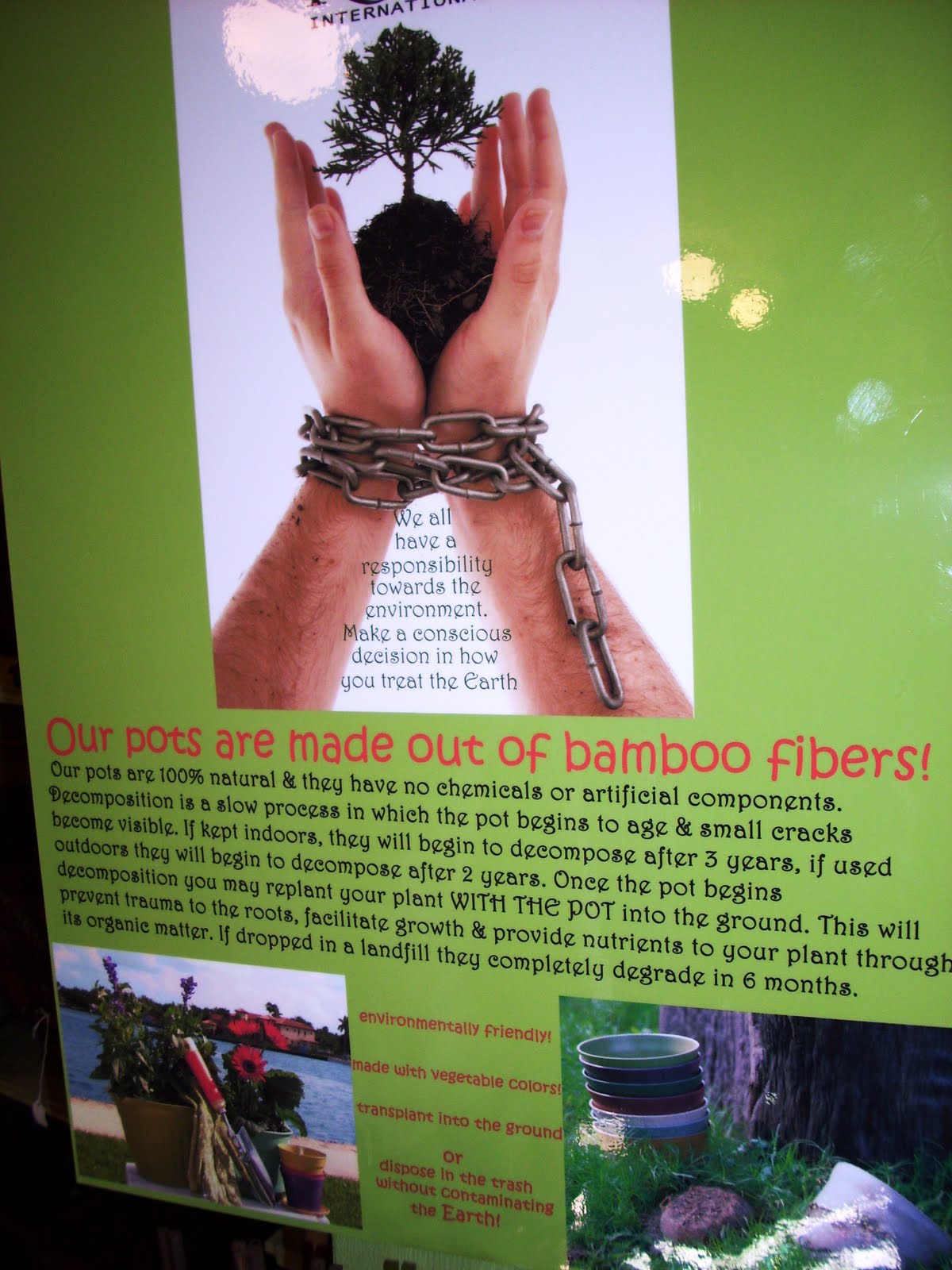
bamboo pots. they start decomposing in 2 years. isnt that awesome??

aww. it's jay-z!

i wish i had this set up in my bathroom! josh was looking through my pictures and goes, "eww, you took pictures in the bathroom!?" i was like...so...? haha

ha ha ha ♥

cat clock. we got this one. isn't it awesome? haha

skinny chicken. now it's in my kitchen!

dinosaur clock. we almost got this one, but decided on the cat

cuuuute

succulent bouquets. they even felt like succulents, even though they were plastic. this is for you, melissa!

owl clock. for all you owl lovers out there!!

fish clock! i love the bright colors

kitty! and lots of other amazing clocks around it

fat chicken. now in my kitchen!!

pair of chickens i wanted. i sort of have a thing for chickens, in case you didn't pick up on that...

they had flowers and different plants that light up. these are ours, we need to buy a proper vase though, but i wanted to show you how cool they are

This shop was seriously amazing. It's a lovely mix of new and old (antiques), and one of the highlights of the shop was all the clocks. There were all kinds of clocks, it was incredible. I've shown all my favorites above, but they had so many that there were new ones in every direction you looked. I absolutely fell in love with this shop, and we probably spent a little too much money... But as Josh said, we will be going back in the future and hopefully by then it will have been long enough that we'll forget how much we spent this past time... haha. And really--if you are ever anywhere in Arizona you NEED to go to this store!!


*All photos are taken by me, with permission by store owners. If you want to use any, please ask me first. Thanks!

Sunday, August 22, 2010

cupcakes! ♥

remember how i told you i was going to do a csn product review? i got a few different items so i'll probably be doing a couple other posts about csn items in the upcoming weeks but these were the first items i have used. ok, so everyone loves cupcakes, right? i mean...duh. they're all the rage right now, and with good reason (they're delish of course!). i saw these little beauties online: le creuset baking cups. they come in packs of 6 and have a bunch of different colors. i literally got these pink and green ones THE DAY AFTER I ORDERED THEM! i was shocked. so these are silicone baking cups and they are currently on sale for $9.95. the picture shown on their site for the pink ones looks a little purple to me, but they arrived in a very pretty light pink color, as seen below:

these things are awesome. i had never even heard of them, so i was a bit skeptical at first. i thought they might be a bit on the pricey side, but if they worked it would be awesome. and they did! my main draw to get these is that they are reusable, which means less paper being thrown away! my main [read: only] beef with cupcakes is that the paper can't even be recycled because they get all gross from the cupcakes, so you are always wasting something when you eat them. so hello, reusable, eco-friendly cupcake/muffin liners!!!

these babies are flexible and non-stick, so you can just pull away a perfect cupcake from them. they are oven, microwave, fridge, freezer, and dishwasher safe. can it get any better? oh...yes. you don't even need a muffin tin to bake them: they stand up all by themselves. i was the most worried about that part because i thought cake batter would be oozing all over the place and i'd have a big mess. but nope! they worked fabulously. the bottom of the cup is sort of slip resistant too, so in moving the cookie sheet into the oven they don't slide around or anything either.

i baked 12 in the silicone ones, and 9 in regular paper liners. this (^above^) is how they came out of the oven.

look how big and fluffy they are! perfection!

bottom line: these are awesome. i think they are worth the price because they are reusable so you will have them for a while, and they work really well. overall i was very impressed. the cupcakes just popped right out of the liners with no mess or fuss. the transaction with csn went smoothly and the shipping was super fast so i was very pleased. go check out csn stores to find these and thousands of other great products!

Saturday, August 7, 2010

let's win stuff!!

here are some lovely giveaways going on that you should check out:

1. my friend julianne (of made by jewls) is hosting a giveaway on her blog for a necklace set from the shop Mountain Love. this is one of the coolest concepts i've seen before for a necklace. it comes with interchangeable "faces" so you can switch out the centers whenever you'd like. cool, huh? go check it out!


2. the blog progressive pioneer is hosting a giveaway for a $25 gift certificate to the shop Modern Organic Fabrics. As described by the owner, Melanie, "In addition to being certified organic, the fabrics I stock are fresh and modern or pretty and fun in a large variety of colors. You can also find some wonderful sewing patterns as well, including Ottobre Design."


aren't both of those awesome? in the words of rachel zoe, "i die." i'm crossing my fingers and hoping i win both. hehe. but because i am nice, i'm telling you about them so you can enter too. ALSO, later this month i am going to be hosting a giveaway on this blog from Julianne's lovely shop! as i got a lot of comments (on my blog and facebook) when i posted about her work before, i know you are all excited for that. so stay tuned, and happy giveaway-entering!

have a fabulous weekend ♥

Sunday, June 20, 2010

off to be rugged...

hi. reminder this week that i will be:


as a parting gift, and something to both entertain and educate, i leave you this:


[i originally found it on elsies blog]

and umm hi, can i just have awesome clothes and play dress up and tea party with my friends all the time like this girl does? [jealous alert!] i would prefer that to hiking and camping in the woods for the week. if anyone could arrange that i would really appreciate it.

ps: i made a button for my blog. its on that sidebar over thurr <---------. take one if you want, i wont be offended either way.

pps: happy fathers day daddy-o. you're awesome ♥

Sunday, April 25, 2010

new and old...

hello! yes, i am now a college graduate. i'll do a post on it, but i need to get pictures off my dads camera first. in other news, i went out with my parents yesterday and stopped by a yard sale and two antique shops. here are some of my finds!

vintage suitcase. i think it was actually a typewriter case.
it will be perfect to house my crafts.

vintage apron! with roosters! i ♥ it

they are cross-stitched on. how cool?!

awesome frame for $1. hollaa.

for "new" things, i have started working on some onesies for the store. i havent had much time for them yet (w/finals, etc), so i've only completed 1.5. here they are, tell me if you like them!!

this one will also say "go green" on the butt.
we want to do some w/birds, lego blocks, sailboats, etc

cute, right? alsoooo, i am thinking about possibly adding a "love your vintage" line to our shop. what do you think? i have two pairs of shoes (along w/other things) that i want to sell. they are adorable and i wish i had smaller feet! i bought these [with intent to sell] back when i went thrifting in arizona.

size 6, good vintage condition

update: this last pair is SOLD!
size 7, good vintage condition. i think they fit more like a 7.5.
i could always sell them on ebay, but i think they would sell on etsy.

so there are some old and some new things. i found a lot of other cool things yesterday that will be used for future projects, so keep on the look out for them! happy sunday ♥

Wednesday, April 21, 2010

BESTeam feature: Artesia

this week's BESTeam feature is on this awesome shop: Artesia. honestly, i don't even know where to begin. not only does this lovely lady make natural bath products, she also donates 10% of her proceeds to Water 1st International. umm, hello--i am all for this! "Water 1st grants funds to communities to establish sustainable safe water systems. Buying from Artesia allows you to pamper yourself while giving the gift of clean water to others. Share water. Drink Deep." amazing, right? to top it all off, her products are awesome and i kind of want them all [good thing josh took away the credit card...].

without further ado, here's introducing Artesia! (click on pictures to go to their listings)

What's your favorite color?
Hmmm… I don’t really have one, but I do favor purple more often than not. Mostly I am enthralled with the just right color that expresses a perfect energy for the appropriate situation.

What inspires you?
A good challenge. I get bored easily and would rather be moving on to master something new.


What do you love most about what you do?
I especially like that I don’t have to rent my brain out to another entity 8 hours a day. I get to decide what I spend my time on. Being a one-woman show means I have many different hats to wear and there is always something to work on that fits the mood of the day. I get to be creative when the mood strikes, and I get to fuss over details on bean counting days. This approach works in a holistic way for me that I am very satisfied with. I also get to decide when it’s time to pack the kids into the Jeep and head to the lake.

[i want 1 of each. they're all flavored...so i'd probably just eat them...]

Is Etsy part-time, full-time, or hobby for you? How do you balance it with everything else?
Etsy is a full time job with hobby wages right now. There is always more to do. Balance is something we are always striving for. When it is slow I am able to get most of my work done while the kids are in school or after they go to bed. Other days, my husband picks up the slack. He is wonderful! What more could you ask for than a partner who goes to work all day and then commutes home and is perfectly willing to cook supper and heard children so you can plug away at being creative and building an empire?

What are your top favorite blogs or websites?
I am a late comer to the whole blogosphere experience. I have just started following a few semi-regularly and there is another gaggle or so that I pop in on once in a while. As far as websites, I’m all over the place. It all depends on what I am researching at the time. I have to admit that after resisting Facebook forever, I now have both a personal page and a business page and I check in several times a day. I also lurk on the etsy forums quite a bit. I guess that helps make up for the reclusive times a self-employed artisan must endure.


What are your current projects?
Well, I don’t want to give away too much too soon, but I am really excited about a couple of bath product ideas I am working on! It’s a bit tricky but when I figure it all out I should have something totally new for the bathing beauties. I got the initial idea after listening to “Ripple” by the Grateful Dead over and over for a day and a half. I just couldn’t burn the song out of my skull until “poof!” this new product idea came to me. Stay tuned….

[with products like this, i can imagine any new products will be awesome. this turns your bath water colored (w/o coloring you or your tub!)]

How did you get started w/your Etsy shop (what made you open it)?
I found Etsy when I was doing research into starting Artesia. I like to do A LOT of research on whatever topic or project I am currently obsessed with. I happened across a blog post about a soap seller from San Francisco and the article mentioned etsy.com as a venue for handmade. I checked it out and added it to the list of things to try. In the end I chose to open a shop on Etsy because the price is right, the traffic is (was) good, there is a strong community aspect, and for me it was a good place to figure out the whole virtual marketplace concept.


AND guess what? she's having a giveaway on girlygirlgiveaways!

where you can find Artesia:
etsy
twitter
facebook
blog

Wednesday, March 31, 2010

i ♥ recycling

this has been what i have been working on all weekend and this week so far. probably none of you care, but its something im very passionate about, so read it if you'd like. i want to thank my friend mellissa for helping me edit it. there are a few charts and pictures, which im not going to bother with. i need sleep. [and some of the formatting is goofy. whatevs.]

i didnt get home until 9:30 and wednesdays are my early nights (since i get up at 5:45am). so i need to go to bed. if you are interested in recycling at all, please read on.

love, jess

with that, here is my analytical report titled "Worth of Recycling in Provo, Utah."
PLEASE DO NOT COPY MY MATERIAL W/O CITING ME!


Introduction

Every year over 300 pounds of recyclable trash is thrown away per person. This is equal in weight to a new LG refrigerator/freezer. With mountains of waste accumulating across the globe, less than 2% of the annual waste system is ultimately recycled. The rest of the waste is transformed into nonproductive solids and gases, stuffed in landfills, or incinerated (“Wastes – Resource conservation”). Most of these waste products are harmful to the environment, as well as human health. We may point to car exhaust or aerosol as the cause of global warming, but really landfills are the number one human-generated source of methane, releasing 7 million tons of methane into the atmosphere each year (Imhoff, 2005). How can we stop this phenomenon when we as individuals may not feel that our actions have an important impact on the environment? Recycling is a program that we can all participate in, and that truly betters our Earth.

In the fascinating book “Paper or Plastic,” by Daniel Imhoff, a phrase is addressed that every American has heard since youth. “’Paper or plastic?’ This seemingly innocuous question assumed almost existential dimensions during the early 1990s, as it became a daily reminder to most of us that our industrial consumer society was running a collision course with the planet’s ecological life-support systems” (Imhoff, 2005, p. 8). By requesting either paper or plastic, valuable resources are destroyed for a one-time use solution. Each year in the United States, over 75 million tons of potential resources are buried in the form of discarded packaging (“Wastes – Resource conservation”). The danger of landfills includes leaching of chemicals into soil and groundwater, and releasing harmful gases into the air.

The world seems to be filled with “less bad” solutions, such as using a paper plate that will be thrown out, or a ceramic plate that will be washed in the dishwasher. With the case of ‘paper or plastic?’ what are we supposed to do? Our answer should probably be “neither.” We need to eliminate, reduce, refill, and recycle as much as possible. This may be less affordable, convenient, or appealingly packaged at times, but will reduce our waste and limit our overall negative environmental impacts.

In 2008 Utah County had a recycling rate of 8.89%. Within Utah County, the City of Provo had a reported recycling rate of 31.90% (Recycling Coalition of Utah). Newspaper and paper can be dropped off at all Provo elementary schools to be recycled and there is even a recycling drop-off station on South Industrial Parkway. These seem like easy ways to reduce our garbage and recycle, but it is only open during certain times of the year, and has odd hours. At the cost of $5 Provo City residents can also order a recycling bin which is picked up every other week (“Current recycling information”). These are all of the current recycling options in Provo, UT.

As citizens of Provo, UT we may be wondering how important recycling is. How can it affect our community? Is it economical? How can it better the earth? Is it something we should invest in? In this report these questions can be summed up into one all-encompassing question: Is recycling in Provo, UT worth it? Through my efforts and research, I will be able to discern if the outcome of recycling is worth the planning, time, and effort we put into it.

Methodology

The methodology of this research will include criteria searched to solve the question, the sources used for researching the question, why the sources were used and how they applied to the research question, and how this information was compiled in order to answer the research question.

After preliminary research to narrow down a topic of study, the main arguments for and against recycling were recorded. The two major constituents of the recycling debate were first—environmental concern and health, and second—the economical factors of recycling. These two elements, both involving quantitative and qualitative values, are the main focus of research presented. By weighing benefits and negatives of these two elements, a determination of worth could be qualitatively conducted.

In this research, secondary sources were solely used including books, articles, and publications from government agencies (such as the EPA). Keywords that were searched in online research included: recycling, recycling in Utah, Provo recycling, worth of recycling, recycling blogs, waste management, EPA, and many others. Information that directly related to environmental impacts of recycling, or economic efficiency of recycling programs were sought out. A diverse array of sources were found, including: company reports and publications, magazine or newspaper articles, government sources, general reference sites, and blogs. Wide views of the issues at hand were researched, and then any sound and qualified information was incorporated into the final results.

While taking notes and quotes from research, I organized my findings into the two sections of concern: environment, and economics. The two were categorically separated by the following guidelines:
1. Environmental effects that could be incorporated into my research include:
-energy conservation
-effects of pollution
-use of virgin materials vs. recycled materials
-waste management and percent recycled
-renewable/nonrenewable sources
-effects of climate change/ozone depletion
2. Economic factors that could be incorporated into my research include:
-cost of recycling programs
-investment factor
-cost to public
-cost to city
-jobs created by recycling vs. waste management
-market for recyclables
Any arguments for or against either of these categories found in articles or books were taken into consideration. By comparing how these environmental factors and economical factors affected the success or failure of recycling programs, the two were weighed against each other in order to determine worth of recycling.

Provo’s curbside recycling is currently contracted out to a company called Waste Management. In order to directly apply my findings to the city of Provo, this company was thoroughly researched to see how Provo’s recycling program was related to the two primary factors (environment and economic). With findings on how Waste Management operates, research of environmental and economic factors (as outlined above) was applied to the business and then a final decision of the worth of recycling in Provo, UT was made.

Results

The two sides of the recycling debate (environmental and economic) can be illustrated clearly in an article titled “Is Recycling Worth the Trouble, Cost?” from ABC News: “"Whether for a good or a bad reason, Americans absolutely love recycling. That's OK as long as they understand it ain't free," Miller said…Costs aside, environmentalists still say recycling pays. "Should people waste natural resources? That's what happens, you waste it when you throw it in the landfill," said Kate Krebs, interim executive director of the National Recycling Coalition. "That really gets to the fundamental makeup of a human being. It goes against nature"” (Sealey, 2010).

To better understand recycling factors and how they apply to Provo, environmental and economic concerns will first be discussed, followed by Provo’s recycling program in depth.

Environmental Concerns

As previously stated, the city of Provo had a recycling rate of 31.9% in 2008 (Recycling Coalition of Utah), which is similar to the national average. “If wastewater is factored in, the total annual flow of waste in the American Industrial system is 250 trillion pounds. Less than 2% of the total waste stream in the United States is recycled. For all the world to live as an American we would need two more Earths” (“Get the facts”). Without factoring in wastewater, almost a third of the solid waste we produce is now recycled. An estimated 25 million Americans have access to recycling programs, which are more popular now than they ever have been before (Sealey, 2010).

There are various environmental concerns that recycling affects, including energy conservation, pollution, and effect on renewable/nonrenewable resources. In the paper recycling industry alone, creating paper from recycled pulp uses 64% less energy, creates 35% less water pollution, and creates 75% less air pollution than a virgin pulp industry would [figure 1] (“Energy spent on,” 2009). When a ton of paper is burned 1,500 pounds of carbon dioxide are released. If that paper were recycled, about 17 trees would be saved, which would absorb a total of 250 pounds of carbon dioxide annually (Platt, Doherty, Broughton, & Morris, 1991, p. 11).

Aluminum is one of the most successful and efficient recyclables currently. “Aluminum cans distinguish themselves as the most recycled and most recyclable beverage container in the world. An awesome 105,784 cans are recycled every minute nationwide” (“Why recycle?”). Aluminum reduces the amount of energy needed to make a can by 96% compared to the virgin material bauxite (Hutchinson, 2008).

Energy conserved by recycling is significant. Recycled plastic bottles use 76% less energy, and recycled newspaper reduces the energy use by 45%. “Across the board, the key factor is the energy intensity of extracting virgin materials, which is an order of magnitude higher than that of recovering the same material through recycling. “Even if you doubled the emissions from collecting recyclables, it wouldn’t come close,” Morris says. Overall, he found, it takes 10.4 million Btu [British Thermal Unit, energy equal to about 1.06 kilojoules] to manufacture products from a ton of recyclables, compared to 23.3 million Btu for virgin materials. And all of the collecting, hauling and processing of those recyclables adds just 0.9 million Btu” [figure 2] (Hutchinson, 2008). This means that making virgin materials requires more than twice the amount of energy that recycled materials would need, a clear case for the importance of recycling in energy conservation.

Recycling plays a key role in slowing the effects of climate change, reducing the depletion of the ozone, increasing energy conservation, and decreasing water and air pollution (Platt, Doherty, Broughton, & Morris, 1991, p. 11). Overall the environmental effects are very positive, and there is a lot of evidence to fully support these facts. In a study done at the Technical University of Denmark and the Danish Topic Centre on Waste over 200 scenarios were examined, in which the impact of recycling was compared to burying or burning certain types of waste material. Their results show that 83% of all the scenarios that incorporate recycling are better for the environment (“Is recycling worth,” 2007).

Economic Concerns

Recycling programs can be controversial economically, since they usually require significant up-front costs to start a quality recycling center. Some people don’t think that the recycling market is stable enough, and that it’s a poor decision to invest in. Stability and high prices of the recycling market are what cause recycling centers to thrive. ““Chicago used to pay haulers to take its recycled materials,” says Ed Skernolis of the National Recycling Coalition. “Now, it has invested $24 million to buy recycling carts for 600,000 homes and will deliver the recyclables to a single-stream processing facility—which will now pay the city instead of being paid”” (Hutchinson, 2008). This shows that with the proper investment into an efficient recycling facility, large cities can make a profit from recycling programs.

The issue is that recycling markets “don’t function smoothly. If you drink a bottle of water, the apparent cost to you of throwing out the empty or recycling it are identical: zero.” To curb this fact some communities charge for garbage collection based on the size of their garbage cans, or only collect garbage contained in specific bags the city sells. More than 7,000 communities in America have established policies like this and have had success, with recycling rates increasing by an average of 30% (Hutchinson, 2008). When people are able to see the consequences for more trash collection, they are more likely to start recycling. Their pocket book is the bottom line.

Polls completed by the National Solid Wastes Management Association (NSWMA) have shown that most Americans not only want to recycle, but are willing to have to pay for it. With recycling programs increasing in efficiency, combined with households setting out more recycling, collection costs by the programs would decrease. “Better markets for recyclables and increases in collection productivity are a must. Current market development efforts are beginning to expand some markets. Given a healthy economy and expanded markets for recyclables, recycling will hold its own” (Aquino, 1995, p. 103).

The Environmental Protection Agency (EPA) found that a well-run curbside recycling program costs $50-$150 per ton while trash collection and disposal costs $70-$200 per ton [figure 3]. Efficiency of curbside programs have increased with time and experience over the years, and have demonstrated that recycling can save money (Miller, 2009). Recycling also creates jobs—up to six times the amount of jobs than putting waste in landfills does. “Recycling creates new markets and business niches in our economy. By decreasing the annual cost of solid waste services, it frees up government funds for health and social services, transportation, and public safety” (“The top ten”).

In the summer of 2007, recyclables hit record highs based on global marketing forces. There are a few reasons for this, specifically with plastic, glass, and paper. Plastic is made from oil, which caused prices to double for recycled plastic. Glass is made from sand and energy-intensive soda ash. Following the rise in energy prices, the price of recycled glass also rose. “But the biggest factor, says industry veteran Jerry Powell, the editor of Resource Recycling Magazine, is “the recycling market’s most famous five-letter word, C-H-I-N-A.” With its ravenous demand for raw materials, China benefits from ultra cheap shipping in container ships that would otherwise sail back to Asia empty. “China is a tree-poor country,” says Chaz Miller of the NSWMA, “our recycled paper has become their forest, in a way”” (Hutchinson, 2008). China’s economy is booming and relies on raw materials. Recycled materials provide the perfect solution for China’s demands.

Waste Management

Waste Management currently has 105 recycling facilities in North America, making it the largest provider of recycling services. One of their main focuses is to make it easier for people to recycle (at home or work). In their facilities they use single-stream recycling, which eliminates the need for sorting out types of recyclables by residents and businesses [image 1]. This convenience has helped to increase participation in recycling programs by up to 30%, as well as making the process more efficient and cost-effective. Waste Management is a leader in the recycling industry, especially with their use of single-stream recycling and their innovative ideas, technology, and advanced systems.

The goals of Waste Management as an organization are vast and commendable. They include:
-become more sustainable
-reduce carbon footprint
-increase efficiency in all aspects of the business
-reduce fleet emissions 15% by 2020 (engines of trucks have been programmed to shut down after 5 minutes of idling)
-improve technology and systems
-protect and preserve wildlife
-Over 21,000 acres of land encompassing 49 sites, certified by the International Wildlife Habitat Council, have been set aside for wildlife use by Waste Management
All of these goals are geared towards reducing any negative environmental impacts, and improving environmental health. They also combine these environmental objectives with economical ones by striving towards a more efficient and therefore cost-effective system.

In 2008 Waste Management processed over 5.5 million tons of recyclable materials. Of these, 1.1 million tons of glass, metals, and plastics were processed. These materials were then turned into products like aluminum cans, rebar, plastic bottles, carpeting, clothing, glass bottles, etc. Over 623,000 tons of glass were recycled, which saved approximately 5.6 million gallons of oil. Over 257,000 tons of plastics were recycled, which saved enough energy to power almost 130,000 houses for an entire year. Over 214,000 tons of metals were recycled, which reduced greenhouse gases equivalent to approximately 281,000 cars operating for the entire year.

Waste Management makes a profit from recycling, which has only been increasing with time. In a span of two years their revenue increased from $905 million in 2006 to $1,180 million in 2008 [figure 4] (“2008 Annual report,” 2009). With Waste Management’s contract with residential Provo, blue bins are provided for a fee of $5 a month. Recycling is picked up every other week along with regular garbage.

Discussion

The ultimate goal of this research was to determine if recycling is worth it in Provo, UT by examining environmental effects, economic factors, and the business that manages Provo’s recycling.

Environmental effects of recycling are all beneficial. Energy conservation is one of the largest factors, since recycling and using recycled materials can save tremendous amounts of energy. Along with this, air and water pollution are also decreased since less energy and new resources are being used. These tie directly in with the environmental costs of using virgin materials versus recycled materials. Recycling also conserves nonrenewable resources and allows the market to rely more heavily on renewable resources. All of these components make up an environment in which climate change and ozone depletion are slowed, leading to greater environmental health.

Economic factors of recycling consist of cost of programs, jobs created, and market for recyclables. Initial costs for creating a recycling program can require large investments, which some people reprove due to a perceived instability of the market. However, with increased efficiency of recycling, programs can cost anywhere from $20 to $150 less than garbage disposal. Regarding the job market, recycling has been shown to create up to six times the amount of jobs that putting waste in landfills does. It creates new markets and niches for further business to develop and grow, and decreases the overall cost for waste services.

Provo contracts their main recycling program out to a business called Waste Management. This company has proven to demonstrate positive environmental goals and practices, as well as being cost-efficient and profitable. With goals such as sustainability, reduction of carbon footprint, efficiency, and protection of wildlife, they encompass all the positive aspects of recycling. Where they see themselves lacking, they are proactively improving. This can be seen in examples such as increasing efficiency of their vehicles. Waste Management provides all the resources necessary to efficiently recycle, and Provo has taken advantage of this program. Instead of making a large investment of a city-owned recycling facility, they have contracted out with a company that is well established and reputable.

In conclusion, with all the benefits of recycling that have been illustrated in this paper, there is no reason not to recycle in Provo. It is well worth it, as illustrated in fundamental recycling principles as well as in Waste Management’s business practices and ethics. Recycling helps our environment, is economically sound, and has more than capable facilities available to us here in Provo.


References
2008 Annual report (2009). Waste Management. Retrieved from
http://www.wm.com/wm/investor/subscriptions/2008/2008AnnualReport.pdf

Aquino, J.T. (1995). Waste age/recycling times' recycling handbook. New York, NY: Lewis
Publishers.

Current recycling information. Provo City. Retrieved from
http://www.provo.org/pubworks.recycling_information.html

Energy spent on recycling worth it?. (2009, February 5). The Green Room, Retrieved from
http://naturechallenge.org/2009/02/energy-spent-on-recycling-worth-it/

Get the facts. Recycling Coalition of Utah. Retrieved from
https://utahrecycles.org/facts.php.

Hutchinson, A. (2008 December). Is recycling worth it? PM investigates its economic
and environmental impact. Popular Mechanics. Retrieved from
http://www.popularmechanics.com/home_journal/how_your_house_works/4 291566.html.

Imhoff, Daniel. Paper or plastic: Searching for solutions to an overpackaged world. CA:
Watershed Media, 2005.

Is recycling worth it?. (2007, June 12). SavingAdvice.com. Retrieved from
http://www.savingadvice.com/articles/2007/06/12/101527_is-recycling-
worth-it-easy-energy-savings-laziness-myths-about-gas-money-minute-
video.html

Miller, H. (2009, January 1). Recycling—is it really worth it? LesTout. Retrieved from
http://www.lestout.com/article/news-society/the-green-channel/recycling- worth-it.html

Platt, B., Doherty, C., Broughton, A.C., & Morris, D. (1991). Beyond 40 percent: record-
setting recycling and composting programs. Washington D.C.: Island Press.

Sealey, G. (2010, March 8). Is recycling worth the trouble, cost?: Proposal to end NYC
recycling raises old questions. ABC News, Retrieved from
http://abcnews.go.com/US/story?id=91824&page=1

The top ten reasons to recycle. Rogue Community College. Retrieved from
http://learn.roguecc.edu/recycle/reasonstorecycle.htm

Wastes - Resource conservation - Reduce, reuse, recycle. U.S. Environmental Protection
Agency. Retrieved from http://www.epa.gov/osw/conserve/rrr/recycle.htm.

Why recycle? Alcoa Recycling Company. Retrieved from
http://www.alcoa.com/alcoa_recycling/en/global_rates.asp.

Sunday, August 9, 2009

my latest [green] goal:

anti-styrofoam

on thursday i went to zupas with my coworkers for lunch. i asked for a water cup, went and filled it up, sat down at my table, and then went "shoot!! this is styrofoam!!"

i've been thinking about doing this for a while, but i always forget, or never get serious about it. well, now im serious. ive read more about it, researched a bit more, and i am no longer going to use styrofoam. ever. (well, thats the goal).

if i ask for a to go box and all they have is styrofoam, i will say no thanks. if i ask for a cup for water at a food place and they offer me styrofoam, i will say no thanks. if i need to buy paper plates and they only have styrofoam, or styrofoam is cheaper, i will say no thanks. (paper plates is a-whole-nother issue but its all about balance...water vs paper)

about styrofoam:
i found a good report written by a college student from 2004 that was very informational and well written. LINK.

i found a company that makes a styrofoam alternative and has information on the hazards of styrofoam. LINK.

even if you google polystyrene (the kind of plastic that styrofoam is), you can find many links about the hazards--not even just environmentally but also health-related.

so there you have it. i am now anti-styrofoam. wish me luck!